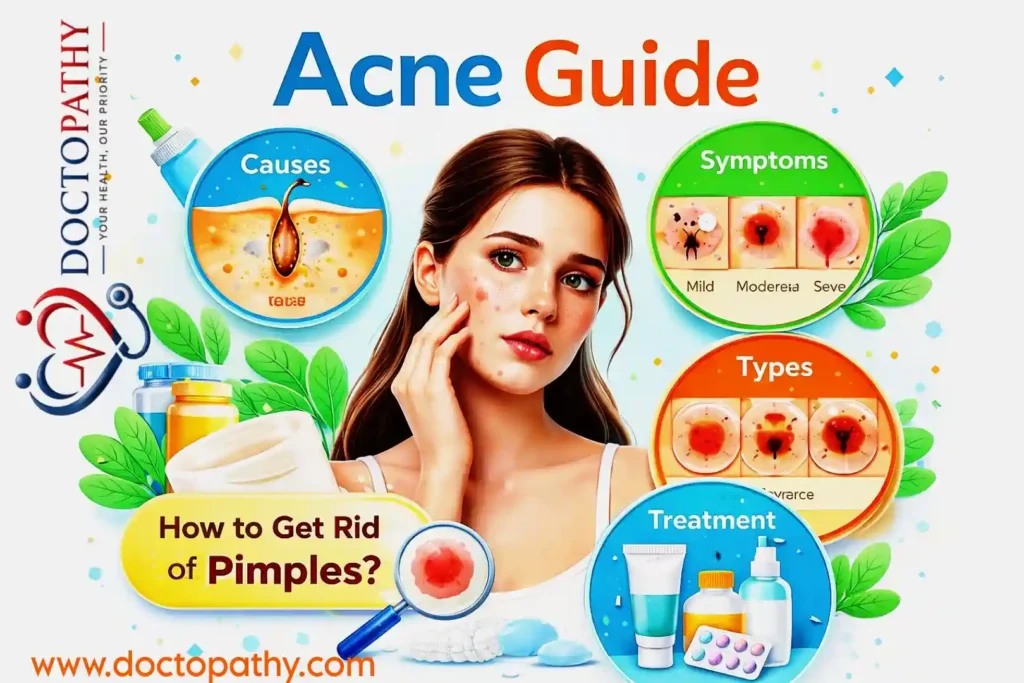
Acne, commonly known as pimples, is a chronic skin condition that appears as whiteheads, blackheads, red bumps or pus-filled lesions on the skin. It usually starts during teenage years (around 13 years of age) but can continue or even begin in adulthood, up to 30 years or more.
Acne can be painful, especially when inflamed and in many cases, it leaves permanent scars on the face if not treated properly. One common form of acne is comedonal acne (comedonica).
Type of Acne – Comedonica (Comedonal Acne)
Comedonal acne is considered a mild form of acne and is very common among teenagers. It mainly includes:
- Whiteheads (closed comedones)
- Blackheads (open comedones)
This type of acne usually appears on the face, nose, forehead and chin but it may also affect the chest and back.
Types of Acne
1. Mild Acne (Comedonal Acne)
- Includes blackheads and whiteheads
- Usually not painful
- Common in teenagers
2. Pustular Acne (Moderate Acne)
- Pimples become red, swollen and filled with pus
- Can be painful
- May leave marks if squeezed
3. Nodular Acne (Severe Acne)
- Large, deep, painful swellings
- Filled with yellow-colored pus
- High risk of scarring
- Requires medical treatment
Symptoms of Acne
Common symptoms of acne include:
- Whiteheads (clogged pores)
- Blackheads (open clogged pores)
- Small red and tender bumps
- Pus-filled pimples
- Pain or inflammation in severe cases
- Scarring after healing
Causes of Acne
Acne mainly occurs due to blockage of sebaceous (oil) glands. The major causes include:
- Excess oil (sebum) production
- Blocked skin pores
- Accumulation of oil under the skin forming pimples
- Bacterial infection leading to pus formation (acne vulgaris)
- Excessive use of creams, lotions or expired cosmetic products
- Lack of proper sleep
- Digestive system problems
- Hormonal changes during puberty (teenage years)
- Stress, which can worsen existing acne
Skin Care
- Use Acne Bar Soap
- Clean the face and affected area twice daily
- Avoid touching or squeezing pimples
Prevention Tips
- Wash your face regularly with a mild cleanser
- Avoid oily and expired cosmetic products
- Maintain proper sleep and hydration
- Eat a balanced diet and improve digestion
- Manage stress through exercise or meditation
When to See a Doctor?
You should consult a doctor if:
- Acne is painful or spreading rapidly
- Pimples leave scars
- Over-the-counter products are not effective
- Severe nodular acne is present
Disclaimer
This article is for educational purposes only. Medications should be taken only after consulting a qualified medical professional.
Dr. Parminder Singh (BEMS)