
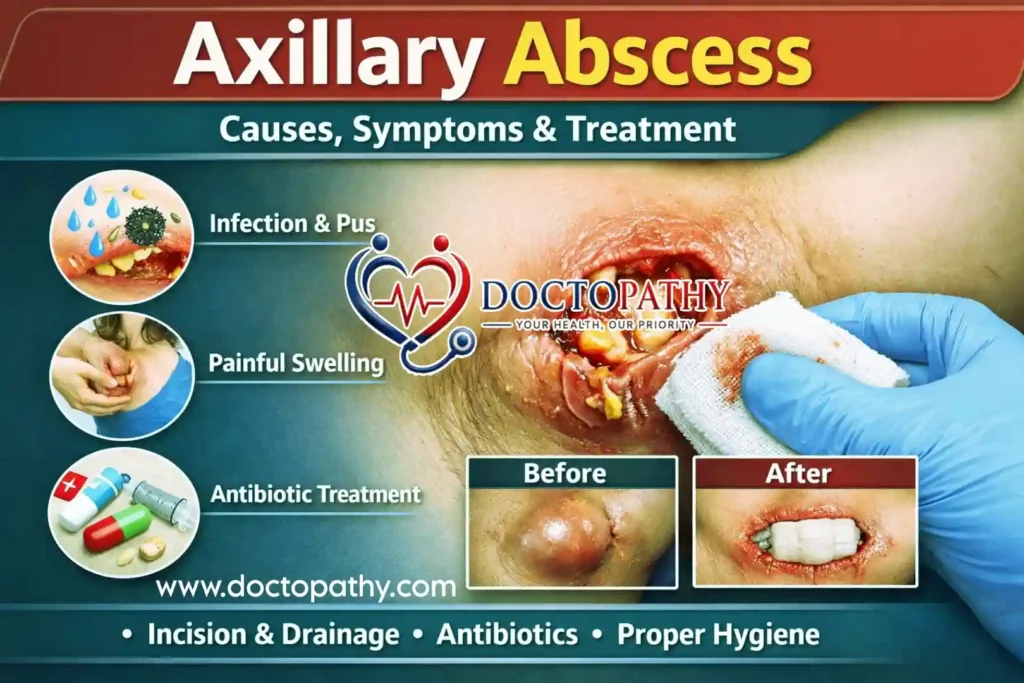
An axillary abscess is a painful, pus-filled swelling that develops in the armpit (axilla). It usually occurs due to bacterial infection of sweat glands or hair follicles. In some people, these abscesses can recur multiple times, causing discomfort and difficulty in daily activities.
Also read this post :- Amikacin Sulphate Injection: Uses, Benefits, Side Effects, and Precautions
What Is an Axillary Abscess?
An axillary abscess forms when bacteria enter the skin through hair roots or sweat glands, leading to infection and pus accumulation. The affected area becomes swollen, hard, red, and painful. In severe cases, multiple abscesses may appear one after another or simultaneously.
Repeated abscesses may be associated with conditions like hidradenitis suppurativa, poor hygiene, excessive sweating, diabetes, or weakened immunity.
Common Causes of Axillary Abscess
- Excessive sweating in the armpit
- Bacterial infection (commonly Staphylococcus aureus)
- Shaving or friction causing skin injury
- Blocked sweat glands
- Poor hygiene
- Recurrent infections
- Obesity or diabetes
Symptoms of Axillary Abscess
- Painful lump in the armpit
- Redness and warmth over the swelling
- Pus or foul-smelling discharge
- Fever (in severe infection)
- Repeated formation of boils
- Difficulty moving the arm due to pain
Treatment of Axillary Abscess
Also read this post :- Neem: Benefits, Uses, Dosage, and Side Effects
1. Medical Evaluation
If abscesses are recurrent or painful, a doctor’s examination is necessary. Self-treatment can worsen the infection.
2. Incision and Drainage
In advanced cases, the abscess may require surgical incision and drainage. The infected tissue and pus are removed, and the wound is cleaned thoroughly. A medicated dressing is applied to allow deep healing.
3. Antibiotic Therapy
Doctors may prescribe oral or injectable antibiotics depending on the severity of infection. Antibiotics help control bacterial spread and prevent recurrence.
⚠️ Antibiotics should only be taken under medical supervision.
4. Wound Care
- Keep the area clean and dry
- Use antiseptic solutions as advised
- Regular dressing changes
- Avoid squeezing the abscess
Home Care and Precautions
- Trim armpit hair instead of shaving
- Wash the area with mild antiseptic cleansers
- Avoid tight clothing
- Do not apply irritants without medical advice
- Warm compresses may help reduce pain and promote drainage
Diet and Lifestyle During Treatment
- Avoid oily and fatty foods
- Drink plenty of water
- Maintain good personal hygiene
- Manage underlying conditions like diabetes
Prevention of Axillary Abscess
- Maintain proper armpit hygiene
- Control excessive sweating
- Avoid repeated friction or skin injury
- Use antibacterial soaps if advised
- Seek early treatment for small boils
When to See a Doctor?
- Abscesses recur frequently
- Severe pain or fever develops
- Pus discharge continues for many days
- Swelling spreads to nearby areas
Conclusion
An axillary abscess is a treatable but potentially recurrent condition. Early medical care, proper hygiene, and correct treatment can prevent complications. Avoid self-medication and always consult a qualified healthcare professional for safe and effective management.
Also read this post :- Tinea Cruris (Jock Itch): Causes, Symptoms, Diagnosis and Treatment
This information is for educational purposes only and should not be considered medical advice. Please consult a qualified healthcare professional for diagnosis and treatment.