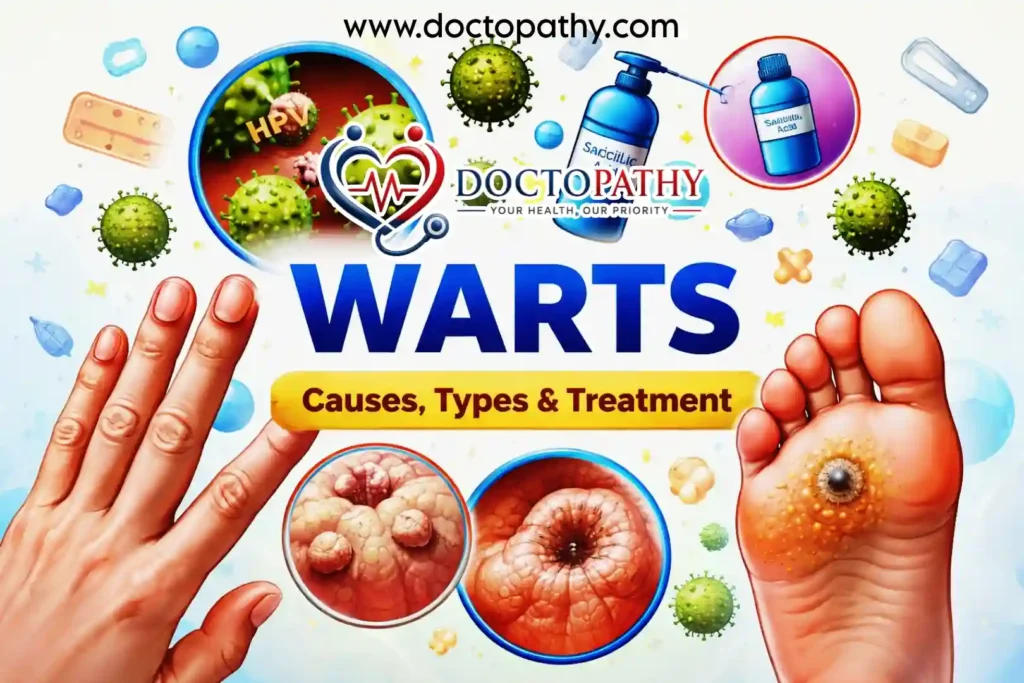
A wart is a localized, benign (non-cancerous) growth of the skin caused by a DNA virus, most commonly the Human Papilloma Virus (HPV). Warts mainly affect the epidermis (upper layer of skin) and are highly contagious, especially among children and young adults.
Warts are also known as verruca, viral wart, or cutaneous wart. The incubation period of the virus is usually around 3 months, and warts can appear on any part of the body.
Also read this post :- Pimples or Acne: Types, Symptoms, Causes, and Treatment
Causes of Warts
Warts are caused by a filterable virus (HPV) that enters the skin through small cuts, abrasions, or cracks.
Risk Factors
- Childhood and adolescence
- Direct skin-to-skin contact
- Scratching existing warts
- Poor hygiene
- Walking barefoot in public places
- Sexual contact (in genital warts)
How Do Warts Spread?
- Direct contact with an infected person
- Autoinoculation (spreading by scratching)
- Sharing towels, razors, or footwear
- Sexual intercourse (in genital warts)
Warts commonly affect the hands, fingers, feet, but may also occur on the face, scalp, neck, legs, and genital area.
Pathology (What Happens in the Skin?)
- Thickening of the epidermis
- Hyperkeratosis (excess keratin formation)
- Degeneration of epidermal cells
- Formation of papillae
- Surface may appear blackish or cauliflower-like
Warts may occur singly or as multiple growths in the same area.
Symptoms of Warts
- Small, painless or painful skin growths
- Rough, thickened surface
- Black dots (clotted capillaries)
- Cauliflower-like appearance
- Pain while walking (plantar warts)
- Bleeding on scratching
Scratching can cause warts to spread to nearby skin.
Types of Warts
1. Simple Wart
- Small, firm growth
- Common on hands and face
- Often multiple
- Usually painless
2. Common Wart
- Larger, rough, blackish lesion
- Up to 1 cm in diameter
- Occurs on hands and joints
- Surface is irregular
3. Plantar Wart
- Occurs on the sole or heel of the foot
- Painful while walking
- Often mistaken for a corn
- Bleeds when scratched, unlike a corn
4. Condylomata Acuminata (Genital Warts)
- Occur on genitals or around the anus
- Sexually transmitted
- Multiple, soft, fast-growing lesions
- Affects:
- Glans penis in men
- Vulva in women
- Growth may increase during pregnancy
⚠️ Note: Genital warts affect only the skin and do not involve deeper tissues.
Also read this post :- Traumatic Rupture of Tympanic Membrane (Perforated Eardrum): Causes, Symptoms, and Treatment
Diagnosis
Diagnosis is usually clinical, based on appearance. In doubtful cases, a biopsy or specialist examination may be required.
Treatment of Warts
Some warts may disappear spontaneously, but many require treatment.
General Treatment
- Destruction of infected tissue
- Prevention of spread and recurrence
Medical Treatment Options
Chemical Treatment
- Salicylic acid (2–40%)
- Trichloroacetic acid (50–100%)
- Phenol (95%)
- Podophyllin (20–25%) for genital warts
- Retinoic acid (for plane warts)
Procedural Treatment
- Electrocauterization
- Cryotherapy (liquid nitrogen)
- Curettage
- Surgical excision
Special Cases
- Multiple plantar warts:
- 3–5% formalin foot soaks (5–10 minutes)
- Genital warts:
- Podophyllin weekly application
- Larger lesions require surgical removal
Homeopathic Treatment
- Thuja is commonly used in homeopathy
- Taken 2–3 times daily for 1–3 months
- May help in recurrent warts (under guidance)
Important Notes
- Warts are recurrent in nature
- Self-cutting or burning warts at home is not recommended
- Always consult a dermatologist or physician for proper treatment
- Early treatment prevents spread and complications
Prevention of Warts
- Avoid scratching warts
- Maintain good personal hygiene
- Do not share personal items
- Wear footwear in public places
- Practice safe sexual habits
Also read this post :- Tinea Cruris (Jock Itch): Causes, Symptoms, Diagnosis and Treatment
Conclusion
Warts are common viral skin infections that mainly affect children and young adults. Though usually harmless, they can be painful, recurrent, and contagious. Early diagnosis and proper medical treatment help prevent spread and recurrence. Always seek professional advice for persistent or genital warts.
Frequently Asked Questions (FAQs)
What is a wart?
A wart is a benign skin growth caused by a viral infection, most commonly the human papillomavirus (HPV). It affects the upper layer of the skin and is contagious.
Are warts contagious?
Yes, warts are highly contagious. They spread through direct skin contact, scratching, sharing personal items, or sexual contact in the case of genital warts.
What causes viral warts?
Viral warts are caused by a filterable DNA virus (HPV) that enters the skin through small cuts or abrasions.
What are the common symptoms of warts?
Common symptoms include:
• Rough, thickened skin growth
• Black dots on the surface
• Cauliflower-like appearance
• Pain while walking (plantar warts)
• Bleeding when scratched
What are the different types of warts?
The main types of warts are:
• Simple wart
• Common wart
• Plantar wart
• Genital wart (Condylomata acuminata)
Are plantar warts painful?
Yes, plantar warts can be painful, especially while walking or standing, because they occur on the soles of the feet.
Can warts go away on their own?
Yes, some warts may disappear spontaneously without treatment, especially in children. However, persistent or painful warts require medical treatment.
What is the best treatment for warts?
Treatment depends on the type and size of the wart. Common treatments include:
• Salicylic acid application
• Cryotherapy (liquid nitrogen)
• Electrocauterization
• Surgical removal
How are genital warts transmitted?
Genital warts are transmitted through sexual contact with an infected person. Safe sexual practices can reduce the risk.
Can warts recur after treatment?
Yes, warts are recurrent because the virus may remain in the skin even after treatment.
Do warts affect only children?
No. Although warts are more common in children, they can affect people of any age.
Are warts dangerous?
Most warts are harmless, but genital warts require medical attention due to their infectious nature and recurrence risk.
Disclaimer:
This content is for informational purposes only and is not medical advice. Consult a doctor or healthcare professional for diagnosis or treatment of warts or any medical condition.