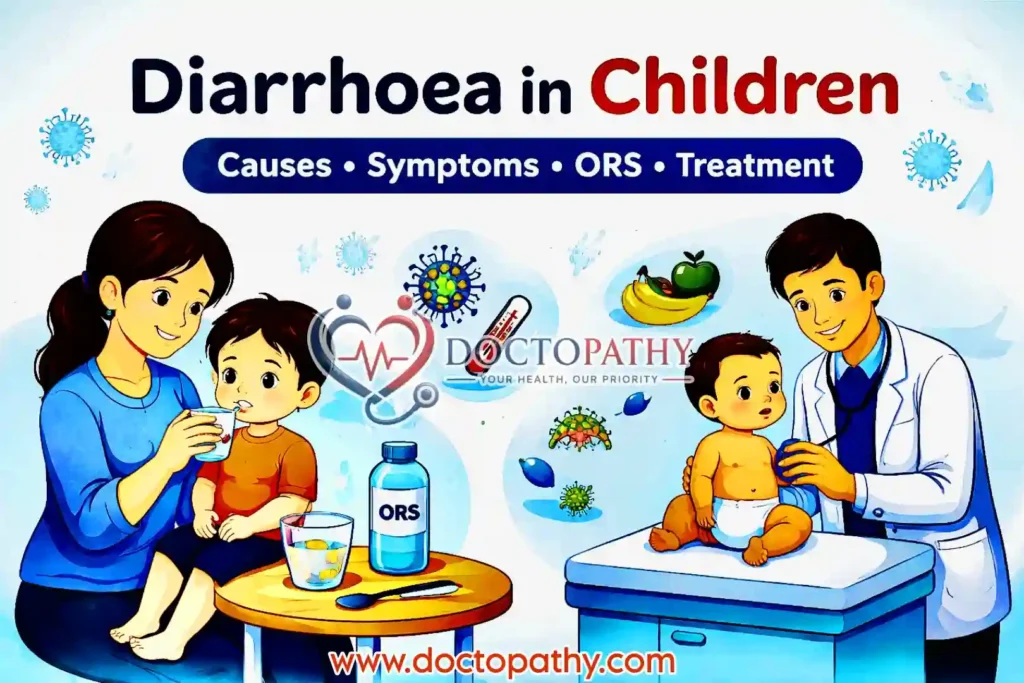
Diarrhoea in children is a very common health problem. Most children experience loose motions several times during infancy and early childhood. In many cases, diarrhoea improves within a few days. However, severe diarrhoea can become dangerous because it causes dehydration.
Diarrhoea means passing loose or watery stools many times a day. The stools may look green, watery, foul-smelling or mixed with mucus. Sometimes, blood may also appear in the stool, especially in dysentery.
Moreover, diarrhoea remains one of the major causes of illness in children under five years of age, especially in developing countries. Fortunately, proper hydration, continued feeding and early treatment help most children recover completely.
What Is Diarrhoea?
Diarrhoea is a condition in which a child passes loose or watery stools frequently. Usually, children pass stools more than four times a day during diarrhoea.
It is important to understand that diarrhoea is not a disease itself. Instead, it is a symptom of another problem, such as infection or digestive upset.
Diarrhoea may be:
- Acute – lasts less than 14 days
- Persistent – lasts 14 to 28 days
- Chronic – lasts more than 4 weeks
Causes of Diarrhoea in Children
1. Infections
Infections are the most common cause of diarrhoea in children.
Common germs include:
Viruses
- Rotavirus
- Norovirus
Bacteria
- E. coli
- Shigella
- Salmonella
Parasites
- Giardia lamblia
- Entamoeba histolytica
These infections usually spread through dirty hands, contaminated water or unhygienic food.
2. Other Childhood Illnesses
Sometimes, diarrhoea happens along with other illnesses, such as:
- Ear infection
- Throat infection
- Respiratory infection
- Teething
- Severe infections like meningitis
In addition, increased saliva during teething may mildly upset digestion.
3. Dietary Causes
Certain food-related problems may also cause diarrhoea.
These include:
- Too much sugar
- Excess fatty foods
- Lactose intolerance
- Improper formula feeding
- Unsuitable foods for age
Therefore, proper feeding habits are very important for children.
Symptoms of Diarrhoea
Mild Diarrhoea
Common symptoms include:
- Mild fever
- Occasional vomiting
- Irritability
- Restlessness
- Poor sleep
- 2–10 loose stools daily
- Mild dehydration
In mild cases, the child usually remains active.
Severe Diarrhoea
Severe diarrhoea may cause:
- Frequent watery stools
- High fever
- Loss of appetite
- Abdominal cramps
- Green stools
- Mucus or blood in stool
- Weakness
- Weight loss
Furthermore, severe diarrhoea can quickly lead to dehydration.
Dehydration: The Most Dangerous Problem
Dehydration happens when the body loses too much water and salts. Young children are more vulnerable because their bodies contain less fluid reserve.
Therefore, parents should recognize dehydration early.
Common Signs of Dehydration
Watch for these warning signs:
- Dry mouth and lips
- Sunken eyes
- Reduced urine
- No tears while crying
- Weakness
- Cold hands and feet
- Fast heartbeat
- Sunken soft spot on the head in infants
In severe cases, the child may become unconscious.
Types of Dehydration
1. Mild Dehydration
Symptoms include:
- Increased thirst
- Slight weakness
- Irritability
However, the child usually stays alert.
2. Moderate Dehydration
Common signs include:
- Dry tongue
- Sunken eyes
- Reduced urination
- Weak skin elasticity
- Sunken fontanelle
At this stage, medical advice is important.
3. Severe Dehydration
This is a medical emergency.
Symptoms include:
- Extreme weakness
- Very little urine
- Fast weak pulse
- Cold hands and feet
- Drowsiness
- Unconsciousness
Immediate hospital treatment is necessary.
Common Myths About Diarrhoea
Many parents stop food, milk or water during diarrhoea. However, this practice is harmful.
✅ Children should continue feeding and drinking fluids during diarrhoea.
Stopping food may weaken the child and delay recovery.
Treatment of Diarrhoea in Children
Rehydration Is Most Important
The biggest danger in diarrhoea is dehydration, not the loose stools themselves.
Therefore, replacing lost fluids quickly is essential.
Oral Rehydration Solution (ORS)
ORS is a mixture of water, glucose and important salts.
It helps by:
- Replacing lost fluids
- Preventing dehydration
- Restoring body salts
However, ORS does not stop diarrhoea directly.
WHO ORS Formula
WHO-recommended ORS contains:
- Sodium
- Potassium
- Chloride
- Glucose
This formula works especially well in hot countries like India.
Homemade ORS
If ORS packets are unavailable, parents can prepare ORS at home.
Mix:
- 1 teaspoon sugar
- A pinch of salt
- A few drops of lemon
- 100 ml clean water
⚠️ Do not add too much salt or sugar.
How Much ORS Should Be Given?
- Mild diarrhoea: 50 ml per kg body weight
- Moderate dehydration: 75–100 ml per kg
Give small sips frequently. Continue ORS even if diarrhoea continues.
Feeding During Diarrhoea
Foods That Help
The following foods are usually safe:
- Breast milk
- Diluted milk
- Curd (yogurt)
- Banana
- Apple
- Rice water
- Lentil water
- Coconut water
These foods help maintain strength and energy.
Foods to Avoid
Avoid:
- Excess sugary foods
- Oily foods
- Aerated drinks
- Very spicy foods
These foods may worsen diarrhoea.
When Should a Child Go to the Hospital?
Seek medical care immediately if:
- Severe dehydration develops
- The child cannot drink fluids
- Vomiting becomes persistent
- Blood appears in stool
- High fever occurs
- The child becomes weak or unconscious
- Diarrhoea lasts more than 3–5 days
In severe cases, doctors may give intravenous (IV) fluids.
Role of Medicines
Most mild diarrhoea cases do not need medicines.
However:
- Doctors may prescribe antibiotics for bacterial infections
- Zinc supplements may help recovery
- Stool tests may identify the cause
⚠️ Avoid self-medication and unnecessary antibiotics.
Prevention of Diarrhoea in Children
You can reduce the risk of diarrhoea by following these steps:
- Wash hands regularly
- Use clean drinking water
- Maintain food hygiene
- Continue breastfeeding
- Keep feeding bottles clean
- Give vaccinations on time
In addition, the rotavirus vaccine helps protect children from severe diarrhoea.
Conclusion
Diarrhoea in children is common, but dehydration makes it dangerous. Therefore, early fluid replacement and continued feeding are extremely important.
ORS, proper nutrition, and timely medical care can prevent serious complications. Parents should stay calm, watch for warning signs and seek medical help when needed.
With proper care, most children recover quickly and safely.
Frequently Asked Questions (FAQs)
Diarrhoea is a condition in which a child passes loose or watery stools frequently.
Common causes include infections, poor hygiene, contaminated food or water and dietary problems.
It can cause dehydration, which may become life-threatening if not treated early.
Dry mouth, sunken eyes, reduced urine, weakness and cold hands or feet are common signs.
No. Breastfeeding and light foods should continue during diarrhoea.
ORS is a solution that replaces lost water and salts in the body.
Yes. A simple homemade ORS can help when packets are unavailable.
Seek medical help if the child has severe dehydration, blood in stool, high fever or persistent vomiting.
No. Most diarrhoea cases are viral and improve without antibiotics.
Good hygiene, clean water, breastfeeding and vaccination help prevent diarrhoea.
Medical Disclaimer :
This article is for educational purposes only. It does not replace professional medical advice, diagnosis or treatment. Always consult a qualified pediatrician for proper medical care.