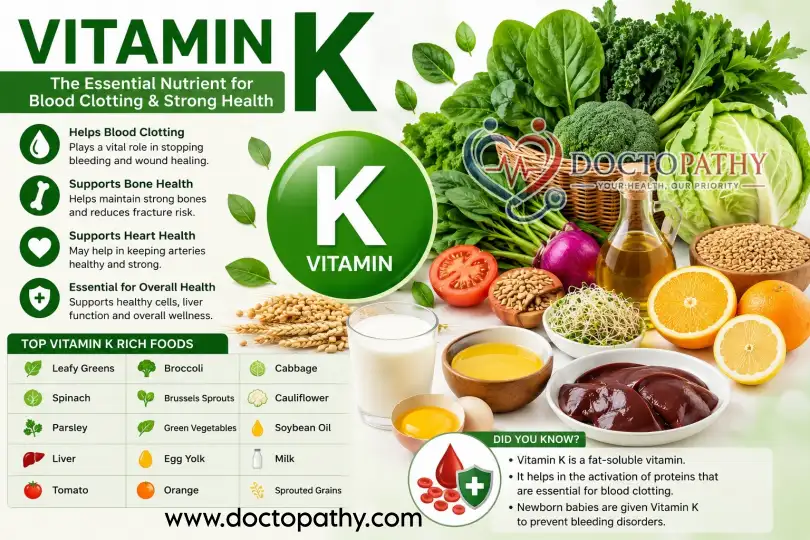
Vitamin K is an essential fat-soluble vitamin that plays a major role in helping blood clot properly. Without enough Vitamin K, even a small injury may lead to prolonged bleeding because the blood cannot clot efficiently.
Vitamin K also supports bone health and helps maintain normal body functions. A deficiency of this vitamin can cause various health problems, especially those related to bleeding and blood clotting.
Functions of Vitamin K
Vitamin K performs several important functions in the body:
- Helps blood clot normally
- Reduces the risk of excessive bleeding
- Supports healthy bones
- Assists in wound healing
- Helps maintain normal levels of clotting proteins such as prothrombin
- Supports overall health of blood vessels
Symptoms of Vitamin K Deficiency
A lack of Vitamin K may lead to the following symptoms:
- Frequent nosebleeds
- Easy bruising
- Bleeding gums
- Heavy menstrual bleeding
- Prolonged bleeding after cuts or injuries
- Blood in urine
- Blood in stool
- Delayed blood clotting
- Excessive bleeding after surgery
- Bleeding under the skin
- Weakness caused by blood loss
In newborn babies, severe Vitamin K deficiency can cause dangerous bleeding disorders.
Conditions Associated with Vitamin K Deficiency
Vitamin K deficiency may increase the risk of:
- Bleeding disorders
- Delayed blood clotting
- Excessive menstrual bleeding (Menorrhagia)
- Nosebleeds
- Gastrointestinal bleeding
- Bleeding after surgery
- Liver-related clotting problems
- Blood in urine (Hematuria)
- Blood in stool (Melena)
- Newborn bleeding disorders
- Certain intestinal disorders that affect nutrient absorption
Important: Many diseases have multiple causes. Vitamin K deficiency is only one possible contributing factor and should not be considered the sole cause without medical evaluation.
Best Food Sources of Vitamin K
Vitamin K is naturally present in many foods.
Green Vegetables
- Spinach
- Cabbage
- Cauliflower
- Radish leaves
- Green leafy vegetables
- Broccoli
Fruits
- Tomato
- Lemon
- Orange
- Other juicy fruits
Grains and Seeds
- Wheat
- Barley
- Sprouted grains
Animal Sources
- Milk
- Egg yolk
- Animal liver
- Ghee
Other Sources
- Soybean oil
- Alfalfa
Plants rich in chlorophyll (green pigment) are generally excellent sources of Vitamin K.
Vitamin K and Newborn Babies
Newborn babies naturally have low Vitamin K levels. Because of this, doctors commonly administer Vitamin K shortly after birth to help prevent serious bleeding disorders.
This practice is widely recommended and has been shown to reduce the risk of Vitamin K Deficiency Bleeding (VKDB) in infants.
Who Is at Risk of Vitamin K Deficiency?
The following people may be at greater risk:
- Newborn babies
- People with liver disease
- Individuals with digestive disorders affecting fat absorption
- People with chronic intestinal diseases
- Individuals taking certain medications that interfere with Vitamin K metabolism
- People with poor nutritional intake
Important Facts About Vitamin K
- Vitamin K is a fat-soluble vitamin.
- It is essential for normal blood clotting.
- Green leafy vegetables are among the richest sources.
- Vitamin K helps activate clotting factors in the blood.
- Deficiency can lead to increased bleeding tendencies.
- Newborns are commonly given Vitamin K after birth.
- Healthy dietary intake usually provides adequate Vitamin K for most adults.
Can You Take Vitamin K Supplements?
Vitamin K supplements are available as tablets and injections. However, supplements should only be taken under the guidance of a qualified healthcare professional.
The correct dosage depends on:
- Age
- Medical condition
- Cause of deficiency
- Current medications
Self-medication with high doses of Vitamin K is not recommended.
When to Consult a Doctor
Seek medical advice if you experience:
- Frequent unexplained bleeding
- Recurrent nosebleeds
- Easy bruising
- Blood in urine or stool
- Excessive menstrual bleeding
- Bleeding that does not stop normally
A doctor can determine whether Vitamin K deficiency or another medical condition is responsible.
Conclusion
Vitamin K is a vital nutrient that helps the blood clot properly and supports overall health. Deficiency may lead to abnormal bleeding and other complications. Eating a balanced diet rich in green vegetables, fruits and other Vitamin K-containing foods can help maintain healthy levels. If symptoms of deficiency appear, consult a healthcare professional for proper evaluation and treatment.
Vitamin K FAQs
Vitamin K helps blood clot properly and supports bone health.
Symptoms may include nosebleeds, easy bruising, bleeding gums, heavy periods and delayed blood clotting.
Green leafy vegetables, spinach, cabbage, broccoli, soybean oil, liver, egg yolk and certain fruits contain Vitamin K.
Newborns have low Vitamin K levels and may receive Vitamin K to help prevent serious bleeding disorders.
Vitamin K supplements should be taken only under medical supervision, especially if you take blood-thinning medications.