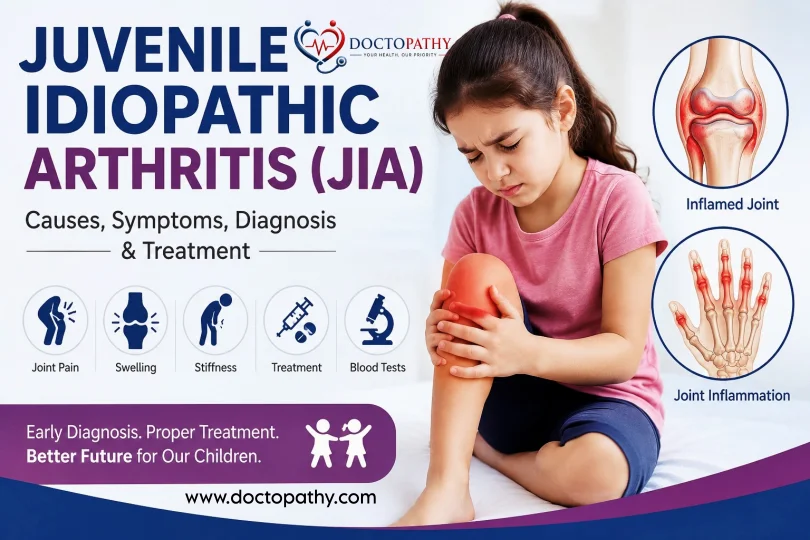
Juvenile Idiopathic Arthritis (JIA), also known as Juvenile Rheumatic Arthritis, is a long-term inflammatory disease that affects the joints of children and teenagers. It usually starts before the age of 16 years.
The word “juvenile” means it occurs in children and “idiopathic” means the exact cause is unknown.
JIA causes inflammation inside the joints, leading to pain, swelling, stiffness and difficulty in movement. Early diagnosis and treatment can help prevent joint damage and improve the child’s quality of life.
Symptoms of Juvenile Idiopathic Arthritis
Common symptoms of JIA include:
- Joint pain
- Joint swelling
- Morning stiffness
- Difficulty moving the joints
- Warmth around affected joints
- Limping, especially in the morning
- Fatigue and weakness
- Fever in some cases
- Reduced physical activity
- Growth problems in severe cases
The symptoms may affect one joint or multiple joints.
Causes of Juvenile Idiopathic Arthritis
The exact cause of JIA is still unknown.
Experts believe that JIA is an autoimmune disease. In autoimmune diseases, the body’s immune system mistakenly attacks its own healthy tissues instead of protecting the body from infections.
Normally, the immune system fights bacteria and viruses. In JIA, the immune system attacks the lining of the joints, causing inflammation and damage.
Factors that may contribute include:
- Genetic predisposition
- Immune system abnormalities
- Environmental triggers
- Unknown biological factors
Risk Factors
Children may have a higher risk of developing JIA if:
- There is a family history of autoimmune diseases.
- The immune system functions abnormally.
- Certain genetic factors are present.
Types of Juvenile Idiopathic Arthritis
JIA can occur in different forms:
1. Oligoarticular JIA
- Affects four or fewer joints.
- Most common type.
- Often affects knees and ankles.
2. Polyarticular JIA
- Affects five or more joints.
- Can involve small and large joints.
3. Systemic JIA
- Causes joint inflammation along with fever and skin rash.
4. Enthesitis-Related Arthritis
- Involves inflammation where tendons attach to bones.
5. Psoriatic Arthritis
- Associated with psoriasis skin disease.
Diagnosis of Juvenile Idiopathic Arthritis
Doctors diagnose JIA through medical history, physical examination and laboratory tests.
Blood Tests
Erythrocyte Sedimentation Rate (ESR)
Measures the level of inflammation in the body.
C-Reactive Protein (CRP)
Helps detect active inflammation.
Antinuclear Antibody (ANA)
May be positive in some children with JIA.
Rheumatoid Factor (RF)
Helps identify specific forms of arthritis.
Anti-CCP (Cyclic Citrullinated Peptide Antibody)
Useful in diagnosing rheumatoid-type arthritis.
Additional imaging tests such as X-rays, ultrasound or MRI may be recommended when needed.
Treatment of Juvenile Idiopathic Arthritis
The main goals of treatment are:
- Reduce pain
- Control inflammation
- Prevent joint damage
- Maintain normal growth and development
- Improve quality of life
Lifestyle Tips for Children with JIA
- Encourage regular gentle exercise.
- Maintain a healthy weight.
- Follow the prescribed treatment plan.
- Attend regular medical check-ups.
- Get adequate sleep and rest.
- Eat a balanced diet rich in fruits and vegetables.
- Avoid activities that put excessive stress on painful joints.
Can Juvenile Idiopathic Arthritis Be Cured?
Currently, there is no permanent cure for JIA. However, with early diagnosis, proper treatment and regular follow-up, many children can achieve remission and live active, healthy lives.
Prevention
Since the exact cause of JIA is unknown, there is no proven way to prevent it. Early recognition of symptoms and timely medical care can help prevent complications and joint damage.
Conclusion
Juvenile Idiopathic Arthritis (JIA) is a chronic inflammatory joint disease that affects children under 16 years of age. It commonly causes joint pain, swelling, stiffness and reduced movement. Although the exact cause remains unknown, it is considered an autoimmune disorder. Early diagnosis, appropriate medication, physical activity and regular medical follow-up can help children manage symptoms and maintain a good quality of life.
Juvenile Idiopathic Arthritis (JIA) FAQs
JIA is a chronic autoimmune joint disease that causes inflammation, pain and swelling in children under 16 years of age.
Early symptoms include joint pain, swelling, stiffness, limping and difficulty moving joints.
Yes. In JIA, the immune system mistakenly attacks the body’s own joints, causing inflammation.
Common tests include ESR, CRP, ANA, Rheumatoid Factor (RF), and Anti-CCP antibody tests.
Yes. With proper treatment and regular follow-up, many children with JIA can lead active and healthy lives.
Medical Disclaimer:
This article is for educational and informational purposes only. It is not intended to replace professional medical advice, diagnosis or treatment. Always consult a qualified healthcare professional regarding any medical condition or treatment.